

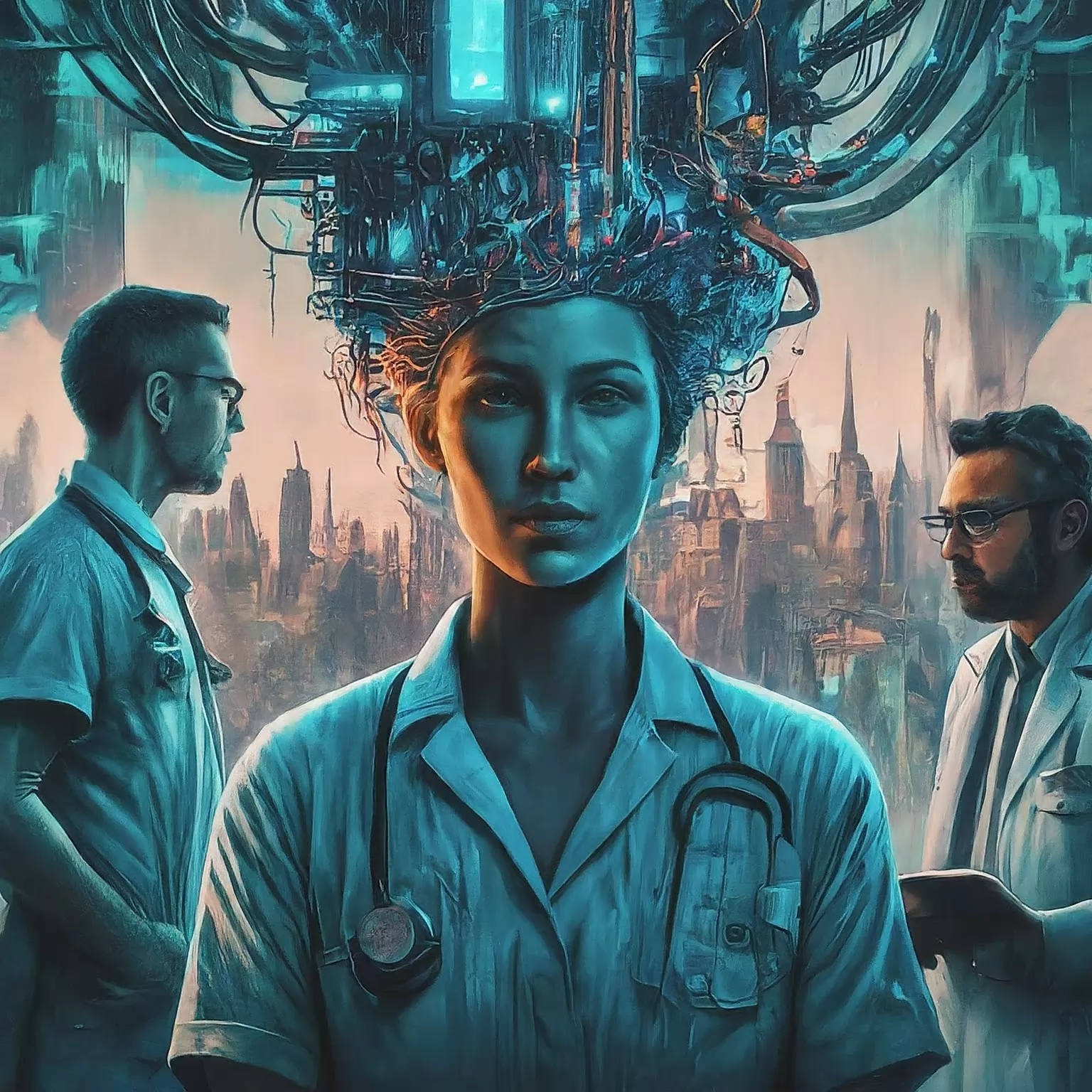
Introduction:
The use of artificial intelligence (AI) in medicine is a rapidly evolving field that is transforming various aspects of healthcare. This article provides an overview of the most significant applications of AI in medicine and its potential impact on the future of healthcare.
Key Applications of AI in Medicine:
- Diagnosis:
- Analyzing medical images (such as X-rays and MRI scans) to detect diseases with high accuracy.
- Developing intelligent systems for diagnosing rare or complex diseases.
- Analyzing medical data to identify risk factors for diseases.
- Treatment:
- Developing personalized treatment plans for patients based on their individual characteristics.
- Using robotic surgery to perform precise and safe surgical procedures.
- Developing new drugs using machine learning techniques.
- Research:
- Analyzing large medical datasets to identify disease causes and treatments.
- Developing new preventive medicine technologies.
- Discovering new drugs and effective therapies.
Examples of AI Applications in Medicine:
- IBM Watson: An AI system that assists doctors in diagnosing and treating diseases.
- Verily Life Sciences: A company affiliated with Alphabet (Google's parent company) that focuses on developing intelligent technologies for preventive medicine.
- DeepMind: A company affiliated with Alphabet (Google's parent company) that developed AlphaFold, a system that can accurately predict how proteins fold.
Benefits of Using AI in Medicine:
- Improved accuracy of diagnosis and treatment.
- Saving time and money.
- Providing personalized healthcare for patients.
- Developing new technologies for preventive medicine.
Challenges of Using AI in Medicine:
- Privacy and security.
- Data dependency.
- Bias.
- Cost.
The Future of AI in Medicine:
AI is expected to revolutionize medicine in the coming years.
Some of the most anticipated developments include:
- Development of AI systems that can diagnose and treat diseases independently.
- Use of AI to develop new preventive medicine technologies.
- Providing fully personalized healthcare for patients.
Conclusion:
The use of AI in medicine is a groundbreaking field that offers numerous benefits to patients and doctors alike.
Despite the challenges facing this field, the future of AI in medicine holds great promise.
Note: This is just a brief overview of the key applications of AI in medicine.
Further research is recommended to gain a deeper understanding of this field.